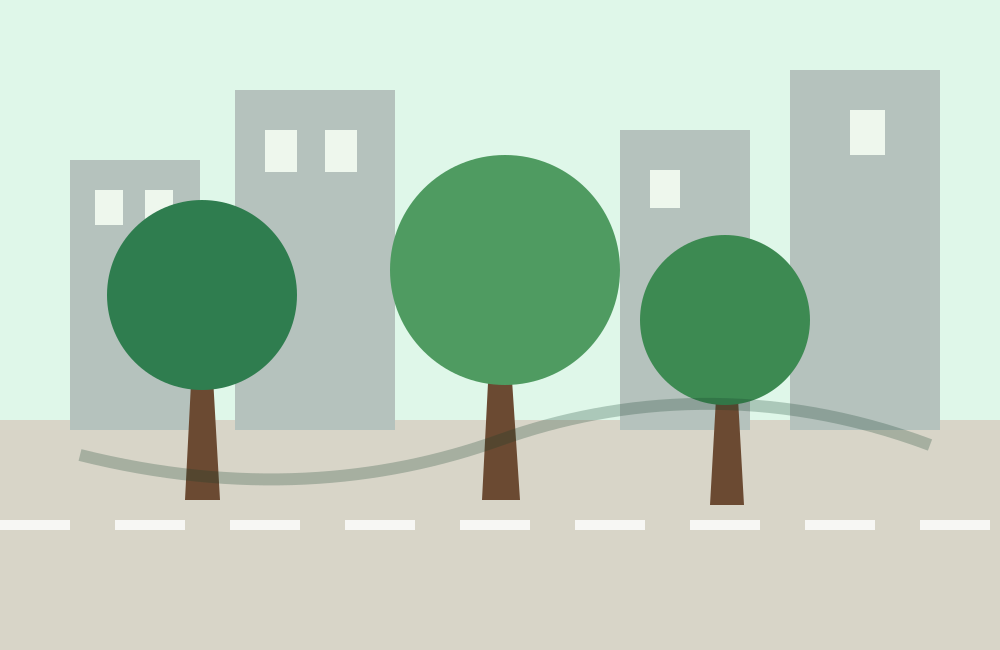
Cities often run hotter than surrounding rural areas because pavement, roofs, and concrete absorb heat during the day and release it slowly at night. This effect, known as the urban heat island, can make already dangerous heat waves even more stressful for older adults, outdoor workers, children, people without air conditioning, and neighborhoods with fewer parks and trees.
How trees cool streets
Trees cool cities in two ways. First, their canopies cast shade, preventing pavement and buildings from absorbing as much solar radiation. Second, trees move water from roots to leaves and release it as vapor, a process called evapotranspiration. That water movement uses heat energy and can lower local temperatures.
Heat is not distributed equally
Many cities have a canopy equity problem. Wealthier neighborhoods often have more mature trees, while historically underserved neighborhoods have wider roads, more industrial land, less shade, and hotter bus stops and sidewalks. Planting trees is therefore not only an environmental project. It can be a health, mobility, and fairness project.
What works best
The most successful urban forestry programs protect large existing trees, plant climate-suitable species, give young trees enough soil volume, water them through establishment, and maintain them for decades. A small planting pit surrounded by compacted pavement is not enough for a long-lived shade tree.
Reader action
Look up your city’s canopy map or urban forestry plan. If your neighborhood has low shade, ask local officials about tree planting, watering budgets, and maintenance plans, not just one-day planting events.