The canopy: a living roof
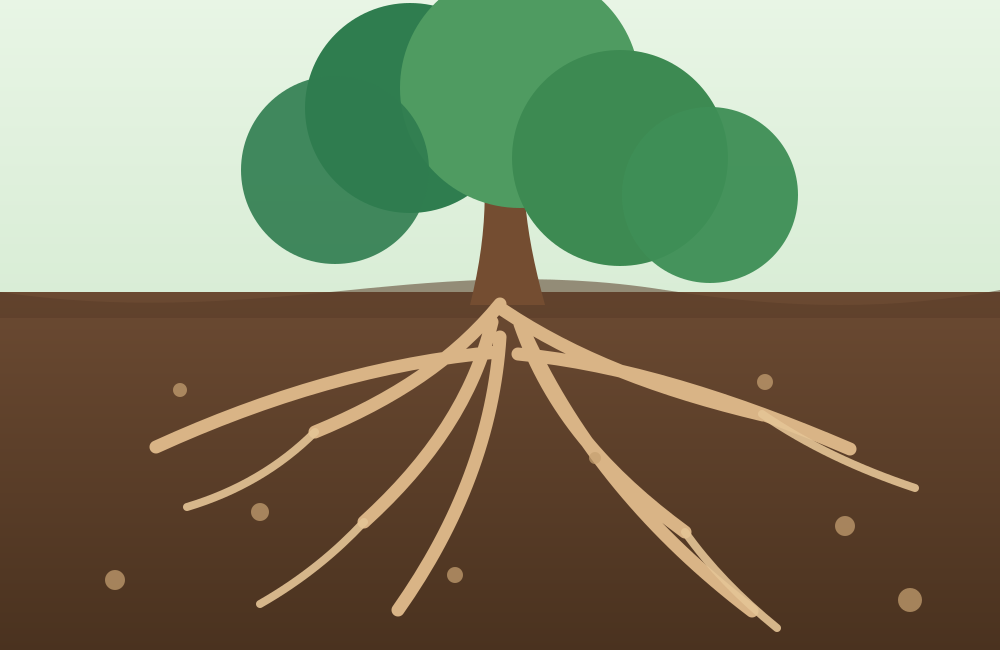
The forest canopy captures sunlight and turns it into leaves, wood, fruit, flowers, seeds, and roots. This living roof also intercepts rainfall, slows wind, creates shade, and produces cooler, more humid microclimates. Birds, insects, epiphytes, and mammals often spend much of their lives in the canopy, rarely touching the ground.
The understory: the nursery layer
Beneath the canopy, young trees, shrubs, ferns, and shade-tolerant plants wait for light. This layer provides nesting sites, browse, flowers, berries, and cover for wildlife. A healthy understory helps forests recover after storms, fires, and natural treefall gaps.
Roots and fungi: the underground economy
Below ground, trees trade sugars with fungi in exchange for nutrients and water. These mycorrhizal relationships help plants survive drought, access phosphorus and nitrogen, and communicate stress signals. Soil is not inert dirt; it is a living economy of roots, microbes, fungi, minerals, air, and water.
Dead wood is alive with purpose
Fallen logs, standing snags, and hollow trunks are essential habitat. They shelter insects, amphibians, cavity-nesting birds, bats, and fungi. As dead wood decays, it releases nutrients slowly, stores moisture, and becomes part of the next generation of soil.
Forests and water
Forests moderate water cycles. Roots open pathways for rain to enter soil. Leaf litter acts like a sponge. Shaded streams stay cooler for fish. Forested watersheds often deliver cleaner water with less sediment and fewer temperature extremes. When forests are removed, water can move too quickly, increasing flood peaks and erosion.
Carbon storage and climate resilience
Trees store carbon in trunks, branches, roots, and soil. Older forests can hold immense carbon stocks, while young restored forests can capture carbon rapidly as they grow. The most resilient climate strategy combines protecting existing forests, restoring degraded lands, improving urban canopy, and reducing fossil fuel emissions.
Restoration that works
Good restoration is not simply planting rows of seedlings. It starts with protecting remaining natural forests, reducing grazing or fire pressure where appropriate, restoring water flows, controlling invasive species, and planting diverse native trees when natural regeneration needs help. Long-term care matters: watering, mulching, monitoring, and community stewardship often determine success.
Forest health is human health
Forests influence clean water, food security, disaster risk, heat exposure, mental health, and local economies. Protecting forests is not separate from protecting people; it is one of the foundations of public health and long-term prosperity.